
A dog may bark at a delivery, another dog outside, an unfamiliar sound, or the moment an owner leaves. Those are different problems, even though they sound similar across a yard or apartment wall. Hush Bark SmartBark Collar offers an automatic response to barking through a rechargeable collar with adjustable sound sensing, vibration and static settings. This review asks a more useful question than “does it stop noise?”: which dog and household, if any, are a sensible fit for the device, and what should a buyer check before paying? We studied the seller’s current checkout, FAQ and manual; we have not used the collar or tested its effect on an animal.
Short answer: Hush Bark has a straightforward physical design, visible controls and a seller-provided manual. It may be easy to set up. It is still a static-capable training collar, not a diagnosis or a substitute for a reward-based behavior plan. The seller excludes several groups of dogs, while veterinary behavior guidance advises against aversive electronic collars. Those are major factors in our recommendation, along with the return policy’s possible fees.
What is in the box, according to the seller?
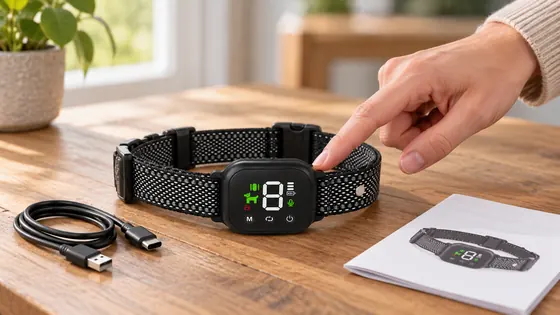
The Hush Bark owner’s manual pictures the collar with an adjustable dark strap and digital control unit, a USB cable, two pairs of silicone-covered contact probes in different lengths, a test light and a printed guide. The unit has a battery display, power control, mode or level controls, a bark sound sensor and a charging port. The visual design is a plus for buyers who want to understand a product before attaching it to a dog. We cannot confirm the contents of an individual shipment, so check the package list on receipt.
According to the manual, barking is detected by a sound sensor and the device can trigger sound, vibration, or static correction. The seller’s feature panel advertises eight sensitivity levels and four modes. The manual also shows how to set the static level to zero, which it labels off. That distinction matters: a buyer who does not want static correction should verify the exact mode and level settings every time the device is turned on. We have not tested whether they persist after charging or shutdown.
The seller says the collar is rechargeable and the FAQ describes battery life lasting several weeks under normal use. No independent runtime test was available for this review. A more active dog or a noisy environment could change how often the device responds. Keep the included charging instructions, avoid a charger above the manual’s specified voltage, and inspect the unit for damage before each use.

Start with the barking trigger, not the setting
Automatic detection is convenient because it does not require an owner to press a remote every time the dog vocalizes. Convenience also creates a limitation: a sound sensor cannot determine whether the dog is excited, frightened, in pain, or reacting to another animal. The manual says the unit may be activated by other ambient sounds and instructs owners to adjust sensitivity if false triggers occur. A false trigger can confuse a dog and make it harder to connect the response to the actual behavior.
The ASPCA’s barking guide recommends identifying the cause of barking and warns against punishment for fear- or anxiety-related barking unless a qualified behavior specialist advises otherwise. That is especially relevant when a dog barks during separation, at strangers, or after a sudden change in behavior. An owner who first logs when barking happens, changes the environment, and rewards calm behavior will learn more than an owner who simply raises a correction level.
Hush Bark does offer a control panel that can make settings visible. The seller says the collar will temporarily protect against repeated triggering after several activations, and the manual includes a way to test outputs before fitting it. These features may help an owner understand the device. They do not prove that the correction is comfortable or appropriate for a particular dog, nor do they show that barking’s underlying cause has been resolved.
Fit and welfare checklist
| Check | Seller guidance | Practical decision |
|---|---|---|
| Dog | Over three months and at least eight pounds | Check health, temperament and the cause of barking |
| Exclusions | Avoid for elderly, pregnant, ill, aggressive or easily frightened dogs | Ask a veterinarian if any condition is uncertain |
| Settings | Sound, vibration and static levels are adjustable | Decide whether aversive outputs align with your training approach |
| Wear | No more than 6–12 hours; regular skin checks | Plan supervised breaks and remove for irritation |
| Return | 30 days, condition and packaging rules | Confirm shipping and possible restocking deductions |
The most valuable row may be the first. The seller’s minimum age and weight are eligibility claims, not a recommendation for every young or small dog above those thresholds. The manual warns that contact points should touch skin without over-tightening the strap and that the collar should not remain in the same position all day. A buyer who cannot supervise and check the dog should not assume that an automatic device is a set-and-forget answer.

We may earn a commission if you buy through this link. Read the manual, welfare guidance and return terms before deciding.
How should an owner think about static correction?
The seller’s FAQ describes static shock as safe and adjustable. That is the seller’s claim, not an independently established conclusion for every dog. The American Veterinary Society of Animal Behavior recommends reward-based methods and advises against aversive electronic collars. The concern is not only whether a device can suppress a bark in the moment; fear, stress, avoidance and the dog-owner relationship also matter.
For a dog barking at a window, closing a blind, changing access to the window and rewarding quiet behavior may address the trigger. For barking when left alone, a gradual plan and professional support may be needed. A collar cannot tell the difference. If a dog is distressed, using a higher correction to quiet the symptom may delay help for the cause. If the behavior is sudden, painful-looking or accompanied by other health changes, ask a veterinarian first.
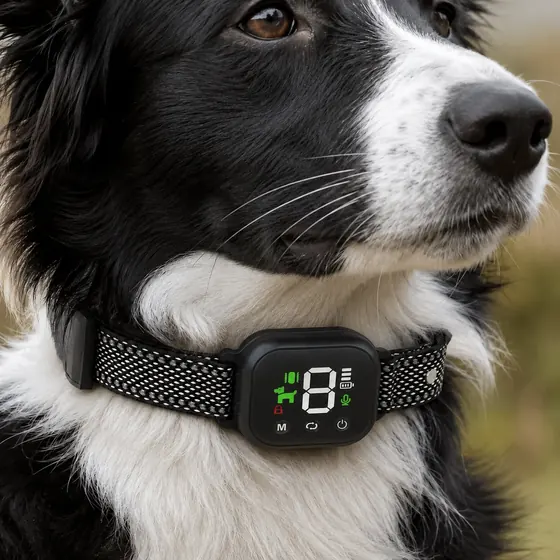
The collar’s clear display and separate settings are useful for understanding what the device is set to do. Still, “level zero” for static does not make every other output automatically harmless or effective. Watch for freezing, avoidance, whining, scratching, skin redness or increased anxiety. Remove the collar if those appear and seek professional advice. Never rely on a promotional “humane” label in place of observing the individual dog’s welfare.
What the checkout and return promise really mean
The Hush Bark checkout offers several bundle sizes and selectable paid extras, including extended warranty and package protection. It displays multiple discounts and a timer, but those promotional messages are not independently verified. The package selector and order summary did not show the same per-unit figure during our review, so the only reliable amount for your order is the final total after quantity, shipping, tax and extras are set. Save that screen before payment.
Delivery timing also needs a careful read. The shipping page says dispatch within 48 business hours and standard delivery in five to seven days. The FAQ says processing takes one to two business days and standard delivery five to ten business days. These are seller estimates, and they do not match perfectly. Ask support for a realistic date if timing is important, especially for a Canadian order.
The headline says “30-days money back,” while the written returns policy requires the item to be in the same condition and original packaging. It places return shipping on the buyer, excludes original shipping and handling from refunds, and reserves the right to charge a minimum 15% restocking fee. The policy does not clearly tell a buyer where to physically mail the item. Get return instructions and the exact deductions in writing before ordering if a trial return is central to your decision.
Our recommendation
Hush Bark has a legible display, rechargeable design, adjustable controls and a manual that gives more detail than the sales headline. Those are real conveniences for comparing devices. The static correction and welfare concerns are too important to overlook. We would start with the reason for the barking, reward-based training and veterinary advice for fear, anxiety or sudden behavior changes. If you and a qualified professional still decide to consider this collar, confirm your dog’s fit and exclusions, check how to keep static off if that matters to you, plan supervised wear breaks and review the complete purchase and return terms.

We may earn a commission if you purchase through this link. Confirm the dog’s suitability, selected settings and written return costs first.